
Customer Energy
The Challenge
Customer-Centric Energy Systems
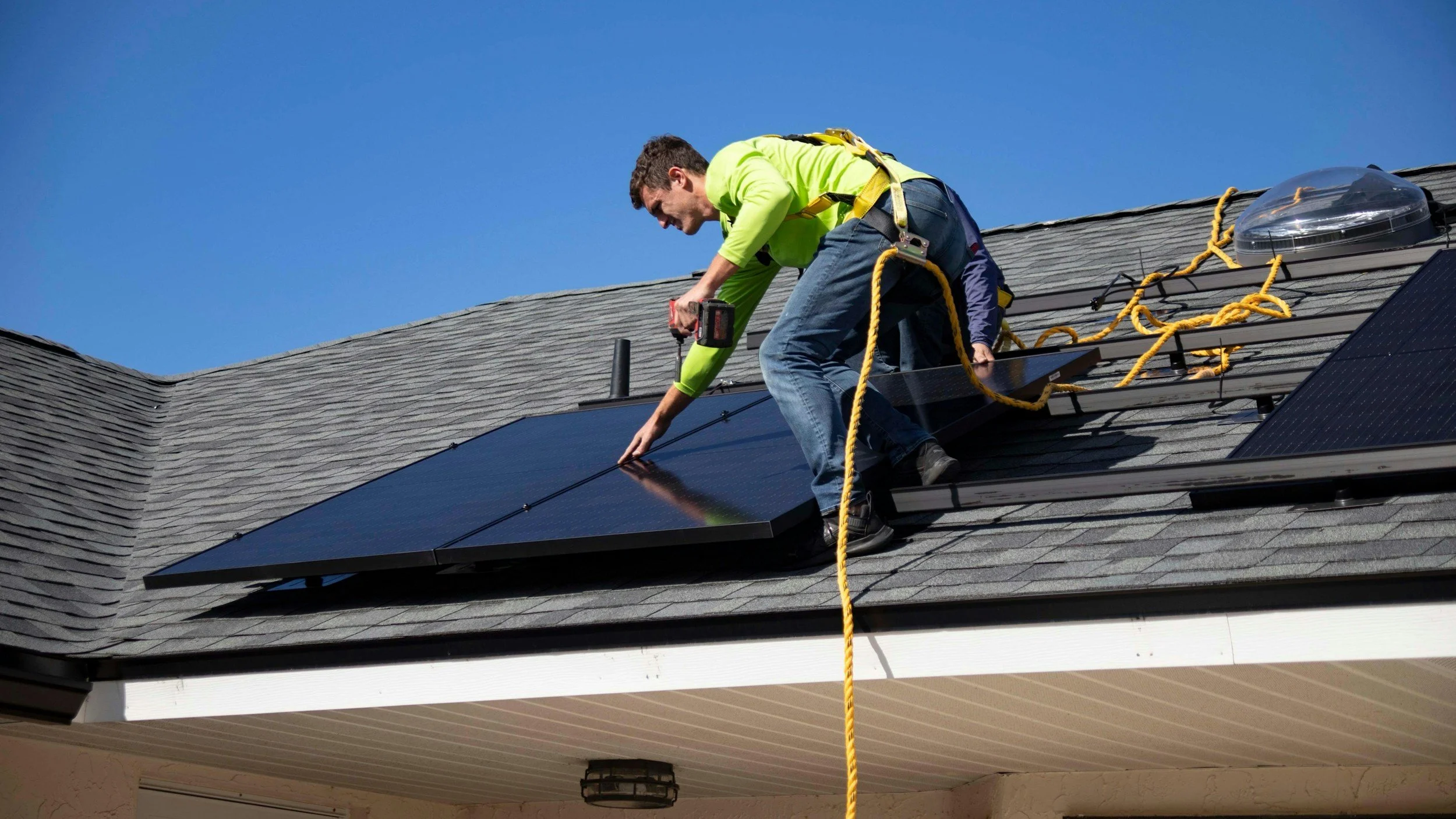
Customers are becoming active participants in the energy system through rooftop solar, battery storage and electric vehicles. New approaches are needed to help customers use these resources while supporting the wider electricity network.
Virtual Power Plants
Virtual Power Plants (VPPs) can coordinate distributed resources such as solar, batteries and EVs. New market frameworks are needed to enable VPPs to provide valuable services to the electricity network.
Flexible Energy Demand
Demand response enables customers to adjust their energy consumption in response to grid conditions, using smart technologies and incentives to support a more flexible energy system.
Our Research
Our Projects
Our research is delivered through five projects focused on developing innovative solutions for a more flexible, efficient and resilient energy system.
Explore our projects →
-
Deakin University
This project develops a coordinated control framework that enables virtual power plants to provide voltage and frequency support through aggregated distributed energy resources. The research addresses uncertainty, device interoperability, location-dependent network constraints and the coordination of multiple aggregators responding to network service requirements. Secure and interoperable communication will support information exchange between distributed devices, aggregators and network operators.
New optimisation and dispatch algorithms will coordinate flexible resources while balancing ancillary service delivery, commercial performance and reliable operation during network disturbances. The proposed methods will be evaluated using representative medium-voltage distribution network models under varying operating conditions and contingency scenarios.
-
University of Wollongong
This project investigates customer-side flexibility as a resource for managing the mismatch between variable renewable generation and electricity demand. Customer-owned renewable generation, behind-the-meter storage and controllable loads will be coordinated through optimisation-based scheduling while maintaining the operational requirements of participating facilities.
The research will develop control and market mechanisms that encourage investment in flexible energy resources and allow customers to respond to network service signals. The resulting framework will improve renewable energy utilisation, reduce peak demand, limit reliance on high-cost generation and create new opportunities for customers to support electricity network operation.
-
University of Wollongong
This project develops an adaptive model predictive control framework for facilities that jointly manage energy and water resources under uncertain demand, renewable generation and operating conditions. A day-ahead optimisation model will schedule flexible processes and storage resources based on expected electricity prices, resource availability and operational constraints.
During real-time operation, progressive model predictive control will update equipment set-points as forecasts and system conditions change. The framework will coordinate flexible loads, energy storage and water storage to improve economic performance, energy efficiency and operational security. Its performance will be assessed using representative industrial system models and non-identifying operating scenarios.
-
Curtin University
This project develops an edge-to-cloud framework for peer-to-peer energy sharing within local electricity markets. Distributed optimisation, secure device coordination and low-latency edge computing will be combined to connect energy resources, market participants and digital infrastructure.
Decision-making functions will be distributed between local devices and cloud services to reduce communication delays and maintain essential operation during network interruptions. The platform will support modular participation, automated monitoring, flexible settlement arrangements and coordinated use of renewable energy resources. A plug-and-play architecture will allow different participants and devices to join the platform without extensive system redesign.
-
UNSW
This project investigates the harmonic, interharmonic and electromagnetic disturbances produced by variable-speed motor drives based on silicon carbide and gallium nitride power semiconductor devices. Their high switching frequencies can improve converter efficiency and power density but may also introduce new power quality and electromagnetic compatibility challenges.
Analytical and simulation-based models will be developed to characterise the interaction between wide-bandgap motor drives, electrical networks, protection systems and industrial equipment. The resulting framework will support the design of passive-component and control-based mitigation techniques. The research will contribute to the reliable integration of compact and efficient motor drive systems in applications including pumps, fans and other industrial processes.
Meet the Customer Energy Team



Prof. Rukmi Dutta
Theme Lead

Prof Danny Sutanto
Co-Theme Lead

Prof Raad Raad
Co-Theme Lead
Jiatong (Kevin) Wang
Janak Nambiar
Wenyuan Bai